Books by Michael P. Andrews
Knowledge Is Your First Defense.
Written from the inside out. By a man who lived the system, investigated it professionally, and refused to let either experience go to waste.
As a consultant, I help defense teams organize, test, and challenge the evidence so the case presented in court reflects what the evidence actually supports.
I say this because I was Framed — I am not Guilty — and I want to help you too.
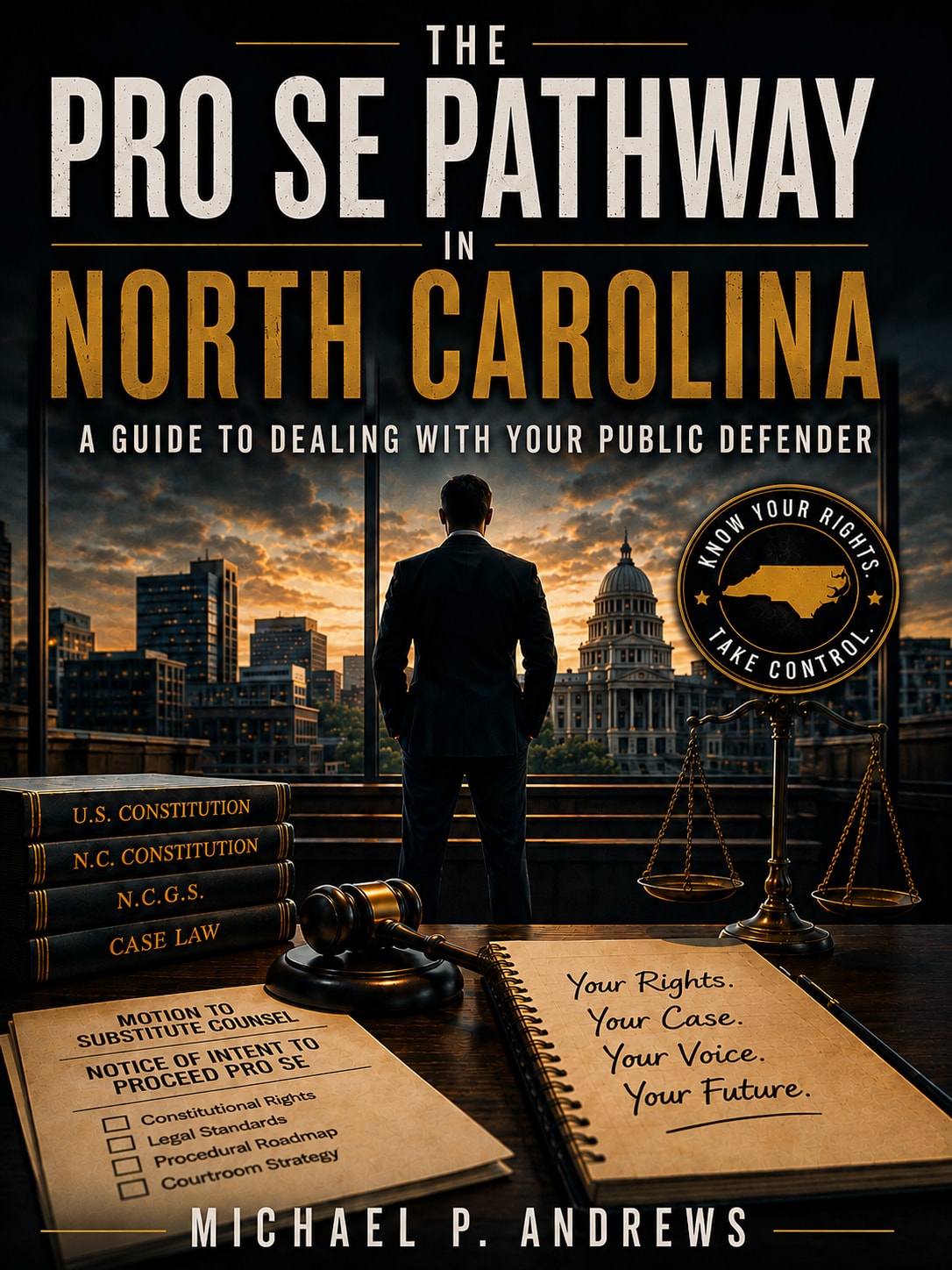
The Pro Se Pathway
Taking Control of Your Defense Through Knowledge, Preparation, and Constitutional Rights
Born from Michael's own experience navigating a system he believes failed him at every turn, this book is not about convincing you to fire your attorney. It is about ensuring that whatever decision you make, you make it from a position of knowledge rather than fear.
Every defendant, whether represented by private counsel, a public defender, or acting pro se, deserves to understand the constitutional rights that belong to them and them alone. An informed defendant is harder to intimidate, harder to manipulate, and far better equipped to make life-changing decisions.
No one should ever be forced to make those decisions out of ignorance. No one should walk out of a courthouse the way Michael did.
What You'll Learn
- Your Sixth Amendment rights and what they actually mean in practice
- How to evaluate whether your attorney is truly advocating for you
- The right to self-representation under Faretta v. California and your state's constitution
- How plea bargaining works, factors that influence plea negotiations, and questions defendants should discuss with counsel before making a decision
- How forensic interviews can be compromised by prior questioning
- How criminal investigations are built, common investigative gaps, and questions overlooked evidence can raise for the defense
"The purpose of this book is to ensure that, whatever decision you make, you make it from a position of knowledge rather than fear."
Available Now
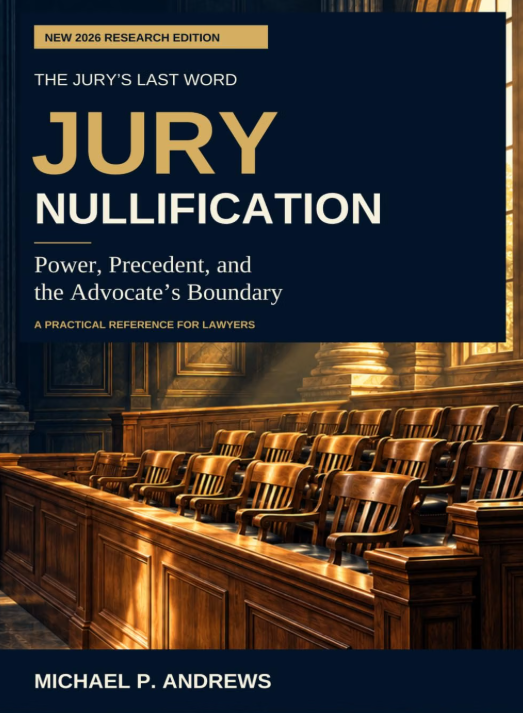
Jury Nullification
Power, Precedent, and the Advocate's Boundary
Jury nullification is one of the most misunderstood — and most consequential — doctrines in American criminal law. Jurors have always had the raw power to acquit regardless of the evidence. What they do not have, in most jurisdictions, is the right to be told that. This book examines that tension directly.
Written as a practical reference for lawyers, this book traces the history of jury nullification from colonial America through modern federal and state courts, examines the constitutional and ethical boundaries on advocacy, and analyzes the cases where nullification arguments succeeded, failed, or were never permitted to be made at all.
Whether you are a defense attorney navigating the line between permissible argument and improper nullification instruction, a prosecutor trying to understand what juries actually do with the law, or a legal scholar examining the doctrine's evolution, this book gives you the framework to think clearly about the jury's last word.
Available Now
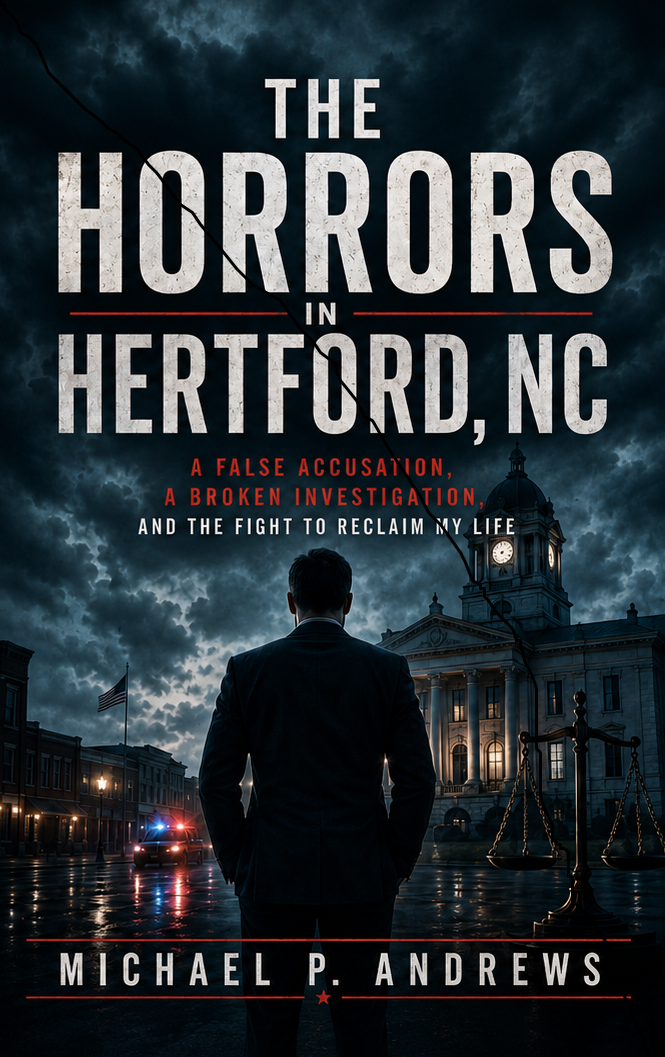
The Horrors in Hertford, NC
A False Accusation, A Broken Investigation, and the Fight to Reclaim My Life
This is the book Michael P. Andrews never planned to write. It is the account of what happened when a false accusation met an investigation that never asked the questions it should have — and what it cost a man, a family, and a community when the system chose confirmation over truth.
Written from the inside, this is not a legal argument. It is a firsthand account of how an accusation becomes a case, how a case becomes a conviction, and how a man who refused to accept that outcome began the long work of fighting back. It is the story behind Framed Not Guilty.
If you want to understand why Michael does this work, and what is at stake when the criminal justice system fails the people it is supposed to serve, this is where that story begins.
Available Now
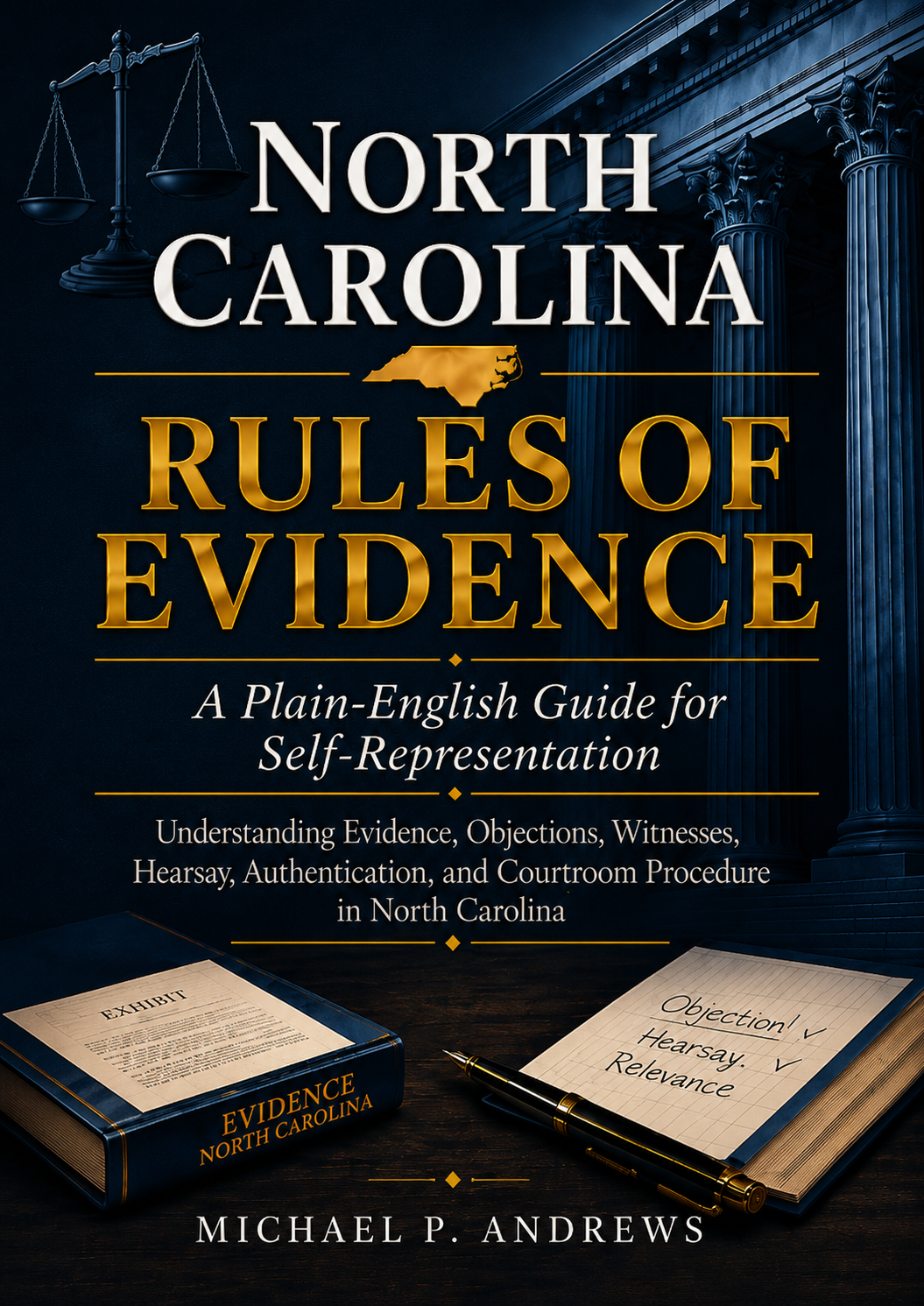
North Carolina Rules of Evidence
A Plain-English Guide for Self-Representation
Evidence law is the language of the courtroom. What can be admitted, what must be excluded, how witnesses are examined, how exhibits are introduced, how objections are made and answered — all of it is governed by the North Carolina Rules of Evidence. If you do not understand those rules, you cannot effectively participate in your own defense.
This book translates the Rules of Evidence into plain language without sacrificing accuracy. It covers every major evidentiary concept a self-represented defendant or informed defendant needs to understand: relevance, hearsay and its exceptions, authentication, character evidence, expert witnesses, objections, and courtroom procedure.
Whether you are representing yourself, working alongside an attorney, or simply trying to understand what is happening in a courtroom, this guide gives you the foundation to follow the evidence, challenge what should be challenged, and protect your rights at trial.
What This Book Covers
- How relevance works and why it is the gateway to every evidentiary ruling
- The hearsay rule, its exceptions, and how to spot when hearsay is being used against you
- How to authenticate documents, photographs, recordings, and digital evidence
- Character evidence rules and when prior bad acts can — and cannot — be used
- How expert witnesses are qualified and how to challenge their opinions
- How to make and respond to objections in North Carolina courtrooms
- Courtroom procedure from opening through closing — what to expect and when
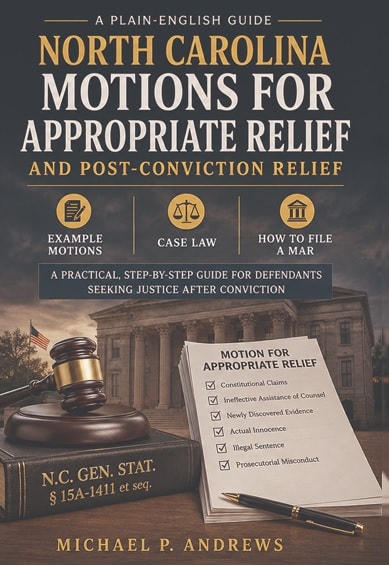
North Carolina Motions for Appropriate Relief and Post-Conviction Relief
A Plain-English Guide to Getting the Relief You Deserve
Post-conviction law can be complicated, technical, and unforgiving. Deadlines matter. Procedural bars matter. Evidence matters. And simply believing that something went wrong is not enough. You must be able to identify a recognized legal ground, support it with evidence, explain why the court can consider it, and show why the error mattered.
This book walks the reader through that process step by step — from understanding what a Motion for Appropriate Relief is and when it may be filed, to identifying constitutional violations, evaluating ineffective assistance of counsel claims, addressing Brady violations, using newly discovered evidence, and preparing for an evidentiary hearing.
Written specifically for defendants, incarcerated individuals, families, and self-represented litigants who may not have legal training, this guide explains the law without burying the reader in unnecessary legal language. If you believe something went wrong in your North Carolina criminal case, this book will help you understand how to evaluate it, document it, and present it to the court.
What This Book Covers
- What a Motion for Appropriate Relief (MAR) is and when it may be filed
- How to identify constitutional violations and other recognized grounds for relief
- How to evaluate ineffective assistance of counsel claims
- How to recognize Brady violations and suppressed evidence
- How to use newly discovered evidence and actual-innocence claims
- How to write, file, serve, and argue an MAR — including evidentiary hearings
- Other remedies: DNA testing, innocence review, federal habeas corpus, and clemency
Available Now
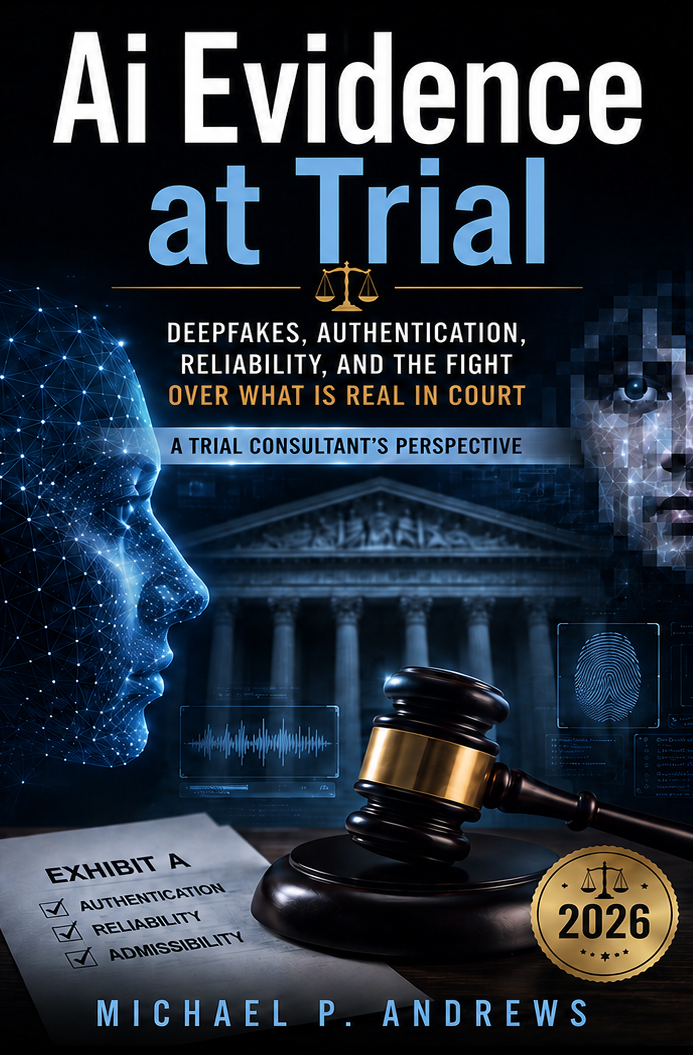
AI Evidence at Trial
Deepfakes, Authentication, Reliability, and the Fight Over What Is Real in Court — A Trial Consultant's Perspective
Artificial intelligence is already in the courtroom. AI-generated images, deepfake audio and video, synthetic text, and algorithmically produced evidence are being offered as proof in criminal and civil cases — and most attorneys, defendants, and jurors have no framework for evaluating them. That gap is dangerous.
This book examines AI evidence from a trial consultant's perspective: how it is created, how it can be manipulated, how authentication works under the rules of evidence, and what questions must be asked before any AI-generated or AI-analyzed exhibit is admitted. It covers deepfakes, AI-assisted forensic tools, large language model outputs, synthetic media, and the emerging legal standards courts are beginning to apply.
Whether you are a defense attorney confronting AI evidence for the first time, a self-represented defendant trying to understand what is being used against you, or a consultant building a challenge to AI-generated exhibits, this book gives you the foundation to ask the right questions — and the framework to fight for what is real.
What You'll Learn
- How AI-generated images, audio, and video are created and how deepfakes work
- How authentication requirements apply to AI-generated and AI-analyzed evidence
- How to challenge the reliability and admissibility of AI evidence at trial
- What questions to ask about AI forensic tools and algorithmic outputs
- Emerging legal standards and how courts are beginning to evaluate AI evidence
- How to build a defense strategy when AI evidence is part of the prosecution's case
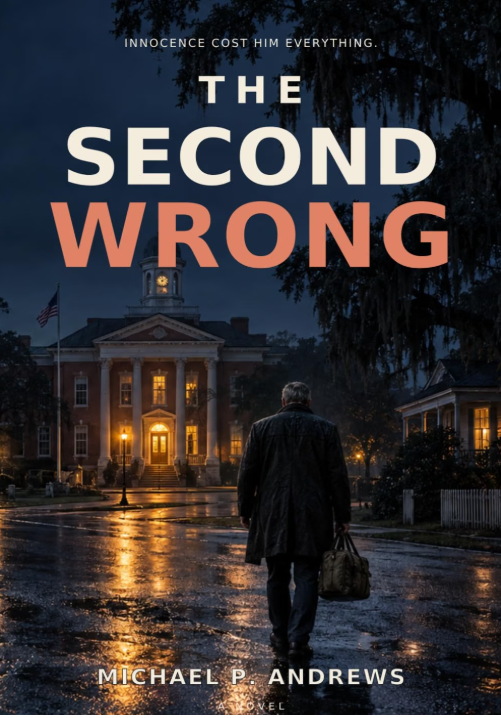
The Second Wrong
Innocence Cost Him Everything.
A man walks out of a courthouse carrying everything he has left — a briefcase and the knowledge that the system failed him. What happens next is not a legal argument. It is a story about what innocence actually costs, and what it takes to keep moving forward when the verdict was wrong.
The Second Wrong is Michael P. Andrews's debut novel — a work of fiction drawn from the emotional truth of what it means to be framed, convicted, and left to rebuild a life the law refused to acknowledge it had taken.
For anyone who has ever wondered what happens after the gavel falls on the wrong verdict, this is that story.
Available Now
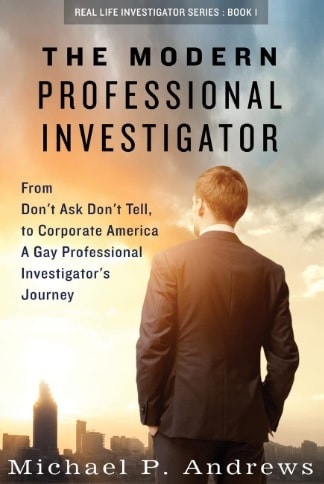
The Modern Professional Investigator
More than a professional guide, this is the story of how Michael P. Andrews became the investigator he is. Drawn from his life, the lessons instilled by his parents, the mentors who shaped his instincts, and the hard-won wisdom that only comes from years in the field, this book traces the journey from a young man learning what it means to truly look for the truth, to a seasoned private investigator trusted with cases that mattered.
Throughout its pages, Michael shares real cases he worked as a licensed private investigator, the investigations that tested him, the moments that defined his methods, and the outcomes that confirmed what he had always believed: that a great investigator is not made in a classroom. He is made by life.
If you want to understand how a thorough, ethical, and relentless investigation is actually conducted, and the character it takes to conduct one, this is where you start.
NC Court Resources
Know the Rules Before You Walk Into That Courtroom.
These are the official documents that govern how criminal cases are prosecuted and defended in North Carolina. Essential reading for any attorney practicing criminal defense in this state.
NC Defenders Manual: Volume 1, Pre-Trial
UNC School of Government
The authoritative reference for North Carolina criminal defense practice from arrest through the eve of trial.
NC Defenders Manual: Volume 2, Trial
UNC School of Government
The companion volume covering everything from jury selection through verdict and sentencing.
NC Judges Benchbook: Criminal
NC Judicial Branch
The reference guide judges use on the bench during criminal proceedings.
General Rules of Practice for Superior and District Courts
NC Judicial Branch
The statewide procedural rules that govern conduct in every Superior Court in North Carolina.
Suggested Reading
Books That Helped Me Develop My Skills as a Trial Consultant
These are resources I have found particularly valuable in understanding North Carolina criminal practice and trial advocacy.
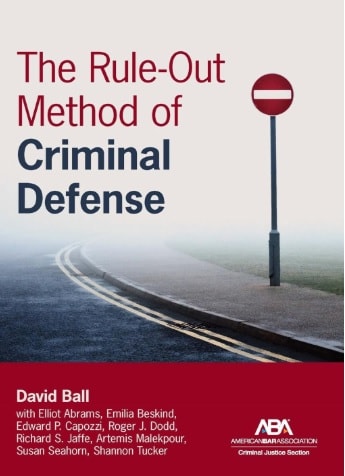
The Rule-Out Method of Criminal Defense
David Ball, Elliot Abrams, Emilia Beskind, Edward P. Capozzi, Roger J. Dodd, Richard S. Jaffe, Artemis Malekpour, Susan Seahorn & Shannon Tucker
A paradigm-shifting approach to criminal defense built around systematically ruling out the prosecution's theory rather than trying to prove innocence.
MacCarthy on Cross-Examination
Terence F. MacCarthy
The definitive text on cross-examination technique from one of the most respected trial lawyers in the country.
MacCarthy on Impeachment
Sean Patrick MacCarthy & Terence F. MacCarthy
A masterclass in using prior inconsistent statements, bias, and motive to challenge witness testimony.
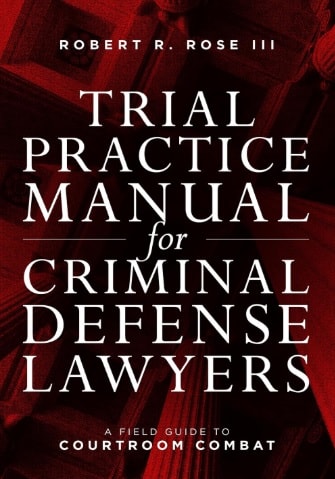
Trial Practice Manual for Criminal Defense Lawyers
Robert R. Rose III
A field guide to courtroom practice, practical, direct, and built for the realities of criminal defense.
The authors and publishers of the titles listed above have not endorsed this website or the consulting services of Michael P. Andrews. These recommendations reflect Michael's personal admiration for their work and his belief that every person navigating the criminal justice system — and every professional serving them — deserves access to the most rigorous thinking in the field.
Ready to Take Control of Your Defense?
Start with the book. Then let's talk.